

Instructional control is vital for effective teaching; it’s about a learner following your directions consistently. Pairing yourself with reinforcers, not the child, is key to establishing this control.
Establishing a system where access to desired items is controlled, like using a sealed box, promotes seeking assistance and builds this crucial connection.
Modifying the environment by limiting distractions and utilizing “first-then” language, alongside visual schedules, further enhances a child’s ability to follow instructions.
Defining Instructional Control
Instructional control, within the framework of Applied Behavior Analysis (ABA), signifies a learner’s consistent responsiveness to instructions delivered by a teacher or therapist. It’s more than simple obedience; it represents a predictable relationship where the learner understands that following directions leads to positive outcomes, specifically access to preferred reinforcers.
This isn’t about power or dominance, but about establishing a clear and reliable connection between the instructional stimulus (the direction given) and the motivating operation (the desire for a reward). A child exhibiting instructional control willingly participates in learning activities and demonstrates a reduced need for prompting or redirection.
Essentially, the instructor becomes a predictor of positive experiences, fostering a cooperative learning environment. Building this control is foundational for skill acquisition and independence.
Importance of Instructional Control for Skill Acquisition
Instructional control is paramount for effective skill acquisition because it creates a learning environment where new skills can be efficiently taught and generalized. Without it, teaching becomes a constant struggle against resistance and requires excessive prompting, hindering true learning.
When a learner consistently responds to instructions, the therapist can systematically introduce new concepts and gradually shape desired behaviors. This predictability minimizes frustration and maximizes learning opportunities. Furthermore, instructional control facilitates independence, as the learner internalizes the expectation that following directions yields positive results.
A strong level of instructional control also allows for smoother transitions between activities and reduces challenging behaviors stemming from a lack of understanding or predictability.
The Role of Reinforcement
Reinforcement is the cornerstone of establishing and maintaining instructional control in Applied Behavior Analysis (ABA). It’s not about simply rewarding compliance, but about creating a powerful association between following instructions and gaining access to valued reinforcers – things the learner genuinely wants.
Initially, continuous reinforcement is crucial during pairing, where the therapist consistently delivers a reinforcer immediately after a simple, easily completed task. This builds a strong connection. As instructional control develops, transitioning to intermittent reinforcement schedules becomes vital for maintaining the behavior long-term.
Remember, the therapist becomes a secondary reinforcer by consistently delivering access to primary reinforcers (toys, activities). This association is what drives the learner to seek the therapist’s direction.

Understanding Pairing as a Foundation
Pairing isn’t about connecting with the child directly, but associating yourself with highly motivating reinforcers, transforming you into a valued secondary reinforcer.
Pairing with Reinforcers, Not the Child
A common misunderstanding in Applied Behavior Analysis (ABA) is the concept of pairing. It’s crucial to understand that you aren’t aiming to become the child’s favorite person directly. Instead, the goal is to pair yourself with the things the child already loves – those powerful reinforcers like preferred toys or activities.
Think of it this way: you become associated with the delivery of these desirable items. Aimlessly playing with a child isn’t true pairing. Effective pairing involves engaging in activities while intermittently delivering reinforcement for even small, easy task attempts. Gradually increase the demands as the child learns to associate your presence with positive outcomes.
This process transforms you into a secondary reinforcer, meaning your presence itself becomes rewarding because it predicts access to primary or other secondary reinforcers. This is the foundation for building instructional control.
Becoming a Secondary Reinforcer
The ultimate aim of pairing isn’t simply to be liked, but to establish yourself as a secondary reinforcer. This means your presence, requests, or even just looking at you, begins to motivate the learner. This happens because you consistently deliver access to preferred items or activities.
When a child learns that you are the gateway to things they want – toys, movement breaks, or special privileges – they start to value your attention and direction. You effectively become a predictor of good things to come. This predictive relationship is the core of instructional control.
This isn’t automatic; it requires consistent pairing with reinforcement. The child must reliably experience that interacting with you leads to positive outcomes, transforming your role from just another adult to a valuable source of reinforcement.
Intermittent Reinforcement During Pairing
While initial pairing often involves continuous reinforcement – delivering a reward every time a small, easy task is completed – transitioning to intermittent reinforcement is crucial. This means rewarding the learner only sometimes after they comply with a request.
This shift prevents the learner from becoming reliant on constant rewards and promotes sustained motivation. Intermittent reinforcement strengthens the behavior because the reward becomes unpredictable, mirroring real-world scenarios. Start with frequent intermittent schedules and gradually decrease the frequency.
During pairing, this looks like delivering reinforcement for increasingly complex task demands, but not every single time. The goal is for the learner to understand that compliance generally leads to rewards, solidifying your role as a secondary reinforcer and boosting instructional control.

Environmental Modifications for Instructional Control
Minimize distractions and limit access to preferred items; a controlled environment, like utilizing a sealed box, encourages the learner to seek your assistance.
Limiting Access to Tangible Items

Restricting free access to highly desirable toys or items is a cornerstone of building instructional control. When a child has constant, unrestricted access, it diminishes the motivation to engage with instructional requests. The goal isn’t deprivation, but rather to create opportunities for the child to request access through appropriate communication.
This naturally increases interactions with the therapist or teacher, fostering a reliance on them as a source for preferred items. Allowing free access introduces unnecessary distractions, making it harder to gain and maintain the child’s attention; By strategically controlling access, you elevate your role as a provider of reinforcement and, consequently, increase your instructional control.
It’s about shifting the dynamic from self-directed play to a collaborative interaction where following instructions leads to desired outcomes.
Utilizing a Controlled Access System (e.g., Sealed Box)
Implementing a controlled access system, such as a sealed box containing preferred items, is a powerful technique. This prevents the child from independently obtaining reinforcers, necessitating them to actively seek assistance from the therapist or teacher. The box isn’t about withholding, but about creating a predictable pathway to access.
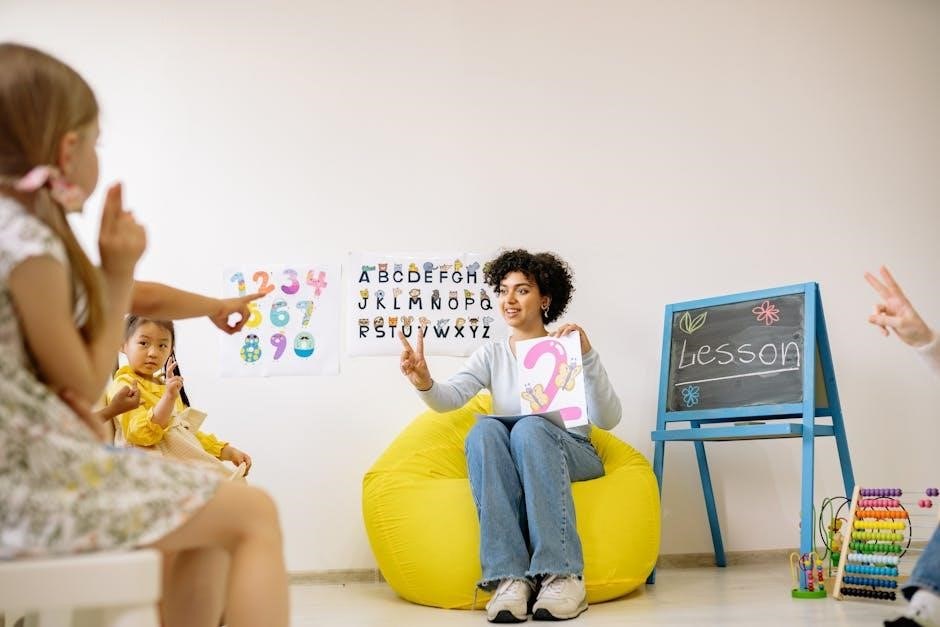
This system encourages the child to ‘mand’ – to request – for help, promoting communication skills alongside building instructional control. When the child attempts to access the box independently, redirection and a clear expectation of requesting assistance are crucial. This reinforces that you are the gatekeeper to the desired items.
The controlled access system transforms you into a valuable resource, strengthening the association between your presence and positive reinforcement.
Minimizing Distractions in the Learning Environment
A carefully curated learning environment is paramount for establishing instructional control. Free access to toys or preferred items throughout the room introduces competing motivations, making it significantly harder for the child to focus on the task at hand and follow your instructions. Distractions dilute the power of your prompts and reinforcement.
Therefore, proactively minimizing these distractions is essential. Remove extraneous materials from the workspace, creating a clean and focused area. This doesn’t mean deprivation, but rather strategic control. The goal is to increase the salience of your presence and the task demands.
By limiting access to tangibles, you elevate the value of requesting access from you, solidifying your role as the provider of reinforcement and enhancing instructional control.

Utilizing “First-Then” Language
“First-Then” language clearly communicates expectations: complete this task first, and then you’ll receive access to a preferred item or activity, promoting compliance.
Explaining the “First-Then” Concept
The “First-Then” strategy is a simple yet powerful communication tool used in Applied Behavior Analysis (ABA) to help individuals understand expectations and transitions. It visually and verbally clarifies that a less-preferred activity must be completed first, before access to a highly motivating reward or activity is granted then.
Essentially, it’s a promise delivered in a clear, concise manner. Instead of simply demanding task completion, “First-Then” frames it as a pathway to something desirable. For example, “First work, then toys!” This predictability reduces anxiety and increases cooperation. It’s crucial to present the “First-Then” statement before initiating the less-preferred task, setting the stage for success and minimizing potential challenging behaviors.
This approach fosters a sense of control and understanding, making the learner an active participant in the process, rather than a passive recipient of demands.
Implementing “First-Then” for Task Completion
To effectively implement “First-Then,” begin by clearly identifying a highly preferred reinforcer – a toy, activity, or even a brief break. Present the “First-Then” statement before requesting the task. For instance, “First, complete five puzzles, then you can have screen time.” Ensure the language is simple and age-appropriate.
Immediately after the required task is completed, deliver the promised reinforcer without delay. Consistency is paramount; always follow through. Gradually increase the demands of the “First” portion as the learner demonstrates success. Visual supports, like a picture of the task and the reward, can enhance understanding, especially for younger learners or those with communication challenges.
Remember to fade the “First-Then” prompts as the learner becomes more independent, transitioning towards natural expectations.
Combining “First-Then” with Visual Schedules
Integrating “First-Then” with visual schedules provides a powerful predictive tool for learners. The visual schedule outlines the sequence of activities, and “First-Then” clarifies the contingency between task completion and access to reinforcement. For example, a schedule might show “Puzzle – First” followed by a picture of “Screen Time – Then.”
This combination reduces anxiety by visually representing what’s expected and when a preferred activity will occur. It enhances understanding, particularly for individuals who benefit from visual supports. Regularly review the schedule with the learner, pointing to each step as it’s completed.
Ensure the schedule is clear, concise, and uses images or words the learner understands. This proactive approach promotes compliance and fosters a sense of control.

Visual Schedules and Their Benefits
Visual schedules offer predictability, reducing anxiety and boosting compliance. They clearly illustrate upcoming activities and reinforce expectations, aiding understanding and promoting independence.
Creating Effective Visual Schedules
Effective visual schedules should be individualized and tailored to the learner’s specific needs and abilities. Begin with simple, clear visuals – pictures or objects representing each activity. Ensure the schedule accurately reflects the sequence of events, promoting predictability and reducing uncertainty.
Consider the child’s cognitive level when selecting visuals; some may benefit from photographs, while others respond better to simple drawings or symbols. Laminate the schedule components for durability and consider using Velcro to allow for easy adjustments as routines change. Regularly review and update the schedule with the learner, ensuring they understand each visual representation.
Keep the schedule visually uncluttered and avoid overwhelming the child with too much information at once. A well-designed visual schedule empowers the learner, fostering independence and reducing challenging behaviors.
Using Visual Schedules to Predict Access to Reinforcers
Visual schedules are powerful tools for explicitly linking work with preferred activities, creating anticipation for reinforcement. Include a visual representation of the reinforcer on the schedule, immediately following the task demand. This visually communicates, “First work, then toy!” making the contingency clear and predictable.
The schedule shouldn’t just show that a reinforcer is coming, but also when. This predictability reduces anxiety and increases compliance. For example, a picture of a preferred toy placed after a work task visually promises access upon completion.
Gradually fade prompts to use the schedule independently. This empowers the learner to self-manage and anticipate rewards, strengthening instructional control and reducing reliance on constant adult direction.
Reducing Anxiety and Increasing Compliance with Visual Supports
Visual supports, like schedules and “first-then” boards, dramatically reduce anxiety by providing predictability. When a child knows what to expect, the uncertainty that fuels challenging behavior diminishes. This is especially crucial for learners who struggle with transitions or have difficulty processing verbal instructions.
Increased predictability directly translates to increased compliance. Knowing a non-preferred task is temporary and leads to something enjoyable makes it more tolerable. Visuals clarify expectations, minimizing ambiguity and potential for misinterpretation.
By visually demonstrating the sequence of events, you’re essentially removing the “guesswork” for the learner, fostering a sense of control and reducing the likelihood of avoidance or refusal.

Reinforcement Strategies
Effective reinforcers motivate learners; identify what they value. Utilize varied schedules – continuous initially, then intermittent – and deliver reinforcement consistently for desired behaviors.
Identifying Effective Reinforcers
Pinpointing what truly motivates a learner is paramount. Don’t assume; directly observe and assess preferences. Tangible items like toys are often effective, but consider activities – movement breaks, preferred games, or even specific social interactions. A reinforcement assessment can systematically reveal these preferences.
Crucially, reinforcers aren’t static. What works today might not work tomorrow, so continuous monitoring is essential. Pay attention to the learner’s reactions; enthusiastic engagement signals a strong reinforcer, while minimal response suggests it’s time to explore alternatives. Remember, the goal is to establish a clear connection between desired behaviors and rewarding outcomes, fueling motivation and learning.
Consider the intensity of the reinforcer relative to the task demand. More challenging tasks may require higher-value rewards.
Reinforcement Schedules (Continuous vs. Intermittent)
Initially, continuous reinforcement – rewarding every correct response – is crucial for establishing a new behavior and building a strong association. This is particularly important during the pairing process, solidifying your role as a source of positive outcomes. However, relying solely on continuous reinforcement can lead to rapid satiation.
Transitioning to intermittent schedules – rewarding responses only some of the time – maintains motivation long-term and increases resistance to extinction. Various intermittent schedules exist (fixed ratio, variable ratio, fixed interval, variable interval), each with unique effects. Variable schedules, where reinforcement is unpredictable, generally produce the highest rates of responding and greatest persistence.
Adjusting schedules based on learner progress is key; start continuous, then gradually move towards intermittent as the skill becomes more established.
Delivering Reinforcement Consistently
Consistent reinforcement delivery is paramount, especially when initially establishing instructional control. This doesn’t mean rigidity, but rather predictability from the learner’s perspective. If a behavior consistently leads to a reward, the learner quickly understands the contingency. Inconsistencies can create confusion and undermine the learning process, potentially leading to frustration and decreased motivation.
Ensure all staff involved are trained to deliver reinforcement in the same manner and under similar conditions. This includes the type of reinforcement, timing, and any accompanying praise or social interaction. A clear understanding of the behavior intervention plan (BIP) is essential.
Even when transitioning to intermittent schedules, maintain consistency in how reinforcement is delivered when it does occur.

Troubleshooting Loss of Instructional Control
When control falters, revisit the Behavior Intervention Plan (BIP) and adjust reinforcement schedules; sometimes, “dialing back” to basic pairing procedures is necessary for re-establishment.
Reviewing the Behavior Intervention Plan (BIP)
A thorough BIP review is the initial step when instructional control diminishes. Scrutinize the plan’s antecedent strategies – are prompts clear and concise? Examine the identified function of problem behaviors; has it shifted? Ensure the reinforcement system remains effective and motivating for the learner.
Specifically, check if the reinforcers listed are still highly preferred. A child’s preferences evolve, so regular assessment is crucial. Verify that the BIP accurately reflects the current skill level and any recent progress. Are the expectations appropriately challenging, or have they become too difficult, leading to avoidance?
Finally, confirm consistency in implementation across all settings and individuals involved. Inconsistencies erode instructional control. A well-maintained and regularly updated BIP forms the foundation for regaining control.
Adjusting Reinforcement Schedules
When instructional control falters, modifying reinforcement schedules is often necessary. If currently using intermittent reinforcement, temporarily revert to a continuous schedule – reinforce every appropriate response. This re-establishes the connection between compliance and reward, boosting motivation.

Gradually transition back to intermittent schedules (e.g., fixed ratio, variable ratio) as control improves. Consider the type of schedule; variable schedules generally maintain behavior longer. Ensure the rate of reinforcement is sufficient to maintain engagement, but not so frequent it becomes predictable.
Observe the learner’s response to changes. If behavior worsens, “dial back” further. The goal is to find the optimal balance – enough reinforcement to motivate, but enough challenge to promote independence.
Dialing Back to Basic Pairing Procedures
If loss of instructional control persists, a return to foundational pairing is crucial. This means refocusing on establishing yourself as a consistent provider of highly preferred reinforcers. Initiate brief, playful interactions, intermittently delivering reinforcement for even minimal effort or approximation of desired behaviors.
Start with incredibly simple task demands, gradually increasing complexity as the learner demonstrates success. The emphasis should be on creating a positive association – you equal good things happening. Avoid correction or prompting during this phase; focus solely on positive reinforcement.
Remember, the goal is to rebuild the learner’s perception of you as a source of valuable rewards, solidifying the foundation for future instruction.